Overview
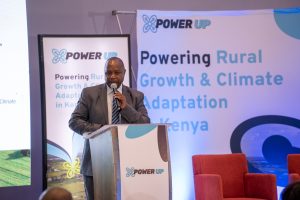
Power Up Kenya convened a side event at COP31 in Türkiye under the theme “Beyond Investment Commitments: Who Benefits from Clean Energy Finance?” The session examined how climate and development finance can move past headline commitments to deliver affordable, accessible clean energy for businesses and communities, especially those still underserved.
The panel brought together policy, finance, enterprise and community voices:
- Governor of Vihiga County, who also chairs the Environment and Climate Change Committee of the Council of Governors
- African Development Bank (AfDB)
- Kenya Commercial Bank (KCB)
- BURN Manufacturing, representing the private sector
- Kenya Climate Change Working Group (KCCWG), representing civil society and communities
Key Messages
- Planning is ahead of implementation. Over 70% of Kenyans still rely heavily on biomass fuels, against a national ambition of universal clean cooking access by 2030. Counties are responding through County Energy Plans (CEPs), but many are still at different stages of development. Financing is the missing link between identified priorities and delivered projects.
- Affordability remains a core barrier. BURN Manufacturing showed how carbon finance can subsidise clean cooking products, cutting the price of its cookstoves by about 40%. Combined with a pay-as-you-go model, this has made them far more accessible to consumers.
- Counties can fund the transition from what they already spend. KCB cited financed projects including the solarisation of health facilities and institutional cooking in schools. Its message to counties was that clean energy need not be treated as new expenditure: money already going to electricity bills and firewood can be redirected into solar and other clean systems, with long-term savings offsetting the upfront cost.
- Regulatory fragmentation raises the cost of investing. KCB noted that multiple licensing and approval processes across counties delay projects and add cost. The Governor was encouraged to work with the Council of Governors on streamlining and centralising approvals to give investors a more predictable environment.
- Aggregation unlocks scale. Individual county projects are often too small for multilateral development banks and other large financiers. Counties were urged to pool similar projects into larger, bankable opportunities. AfDB reaffirmed its commitment to working with partners on financing solutions for communities.
- Fiscal policy and local capacity matter. Panelists said taxes raise the price of clean energy products and called for tax relief and subsidies across production, distribution and uptake. They also called on local financial institutions to build their understanding and use of blended finance and other instruments that reduce lending risk to clean energy enterprises and end users.
- Collaboration is essential. Capital and commitments exist. The challenge is making them accessible, well structured and directed to viable projects and the communities that need them most. This requires closer coordination among national and county governments, development finance institutions, local banks, private enterprises and civil society.
Implications for Power Up Kenya
The discussion reinforced Power Up Kenya’s role in linking policy, finance and enterprise to address systemic barriers to clean energy access. Going forward, the campaign will:
- Support counties and the Council of Governors to strengthen County Energy Plans and turn them into investable project pipelines.
- Deepen engagement with local financial institutions, development finance institutions and clean energy enterprises to promote innovative financing models, widen access to capital and support affordable solutions.
- Advocate with government, civil society and sector partners for stronger policy, regulatory and fiscal measures that enable clean energy investment, production and adoption.
- Convene partnerships across public institutions, financiers, enterprises and development partners so that financing solutions reflect the realities of businesses and communities.
Conclusion
The central lesson of the session was that the question is not only how much climate finance is mobilised, but how effectively it reaches the enterprises and communities it is meant to serve. Closing that gap takes financing models that fit market realities, enabling policies, institutions able to implement, and partnerships that connect capital to viable opportunities. The COP31 discussion gives Power Up Kenya a strong foundation for its advocacy and stakeholder engagement, with a continued focus on turning clean energy finance into tangible benefits for Kenyan businesses, households and communities.